

Melatonin is not a sleeping pill. It is the hormone your brain secretes at nightfall to tell the rest of the body it is time to sleep. It does not knock you out: it tells the time. That distinction completely changes how to use it — and it is why it fails for people who take it like a pill.
The scientific mechanism Secreted by the pineal gland as soon as light drops, melatonin binds MT1 and MT2 receptors in the hypothalamus. MT1 lowers alertness, MT2 shifts the internal clock. It is a chronobiotic: it moves the phase of your circadian rhythm. Evening screens and lighting suppress its natural production — that deficit is exactly what supplementation fills.
Why 1 mg and not 10 Because the literature is clear and counter-intuitive: beyond 1 to 3 mg, you do not fall asleep better. High doses saturate receptors, extend the half-life and produce the next-day grogginess people wrongly blame on "melatonin not working". EFSA validated the reduction of sleep onset time from 1 mg, and jet lag relief from 0.5 mg. One drop is enough — and the dropper lets you go down to half a dose if you are sensitive.
Why an MCT oil Melatonin is fat-soluble: dissolved in medium-chain triglycerides and held a few seconds under the tongue, part of it passes directly into circulation. Onset is faster and steadier than with a dry tablet, and you adjust dose drop by drop — impossible with a fixed tablet.
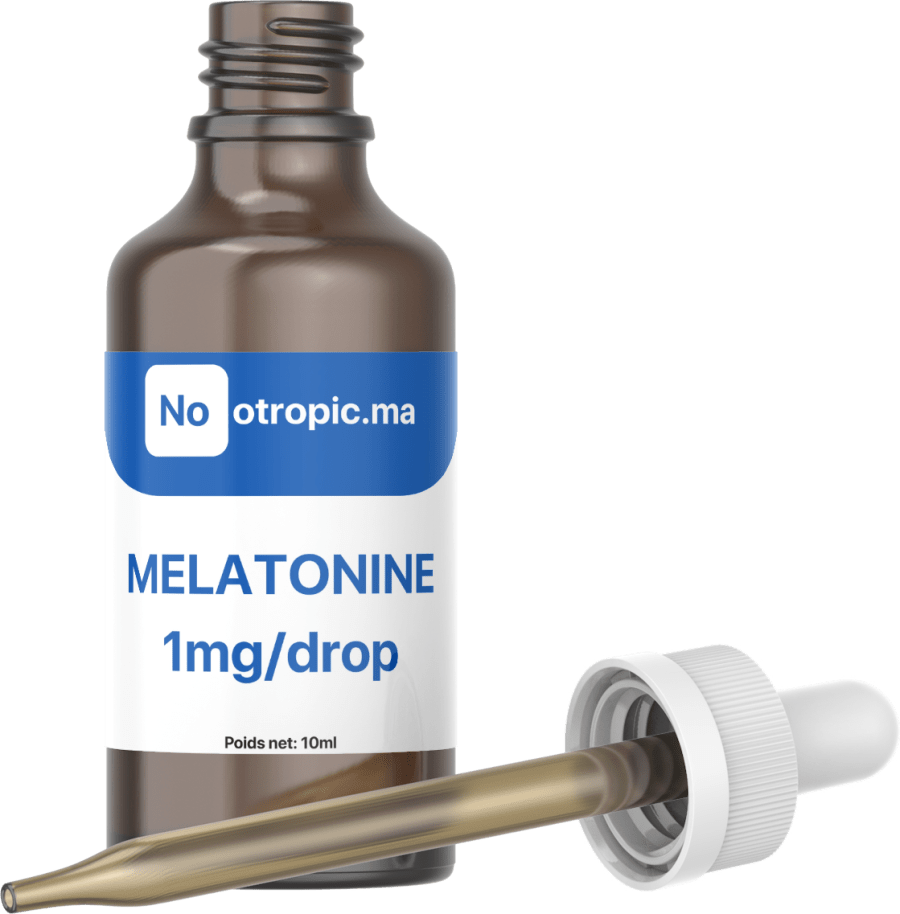
Quality & Transparency Commitment Pharmaceutical-grade synthetic melatonin, HPLC purity >99%, in coconut MCT oil. 10 ml amber bottle with graduated dropper, roughly 200 drops depending on drop size. Two ingredients, nothing else: no sugar, no flavouring, no preservative.